
Hospital Cleanroom Door Systems: Structure, Standards & Engineering Advantages
In critical medical environments such as operating theatres, ICUs, laboratories, and sterile wards, air cleanliness directly impacts patient safety and infection control.
The hospital cleanroom door system is a key control point in maintaining cleanroom performance.
In many projects where final inspections fail to meet cleanliness standards, the root cause often lies in improper door sealing structures.
This article provides a comprehensive analysis of hospital cleanroom door systems, including structural design, technical standards, performance advantages, and selection guidelines.
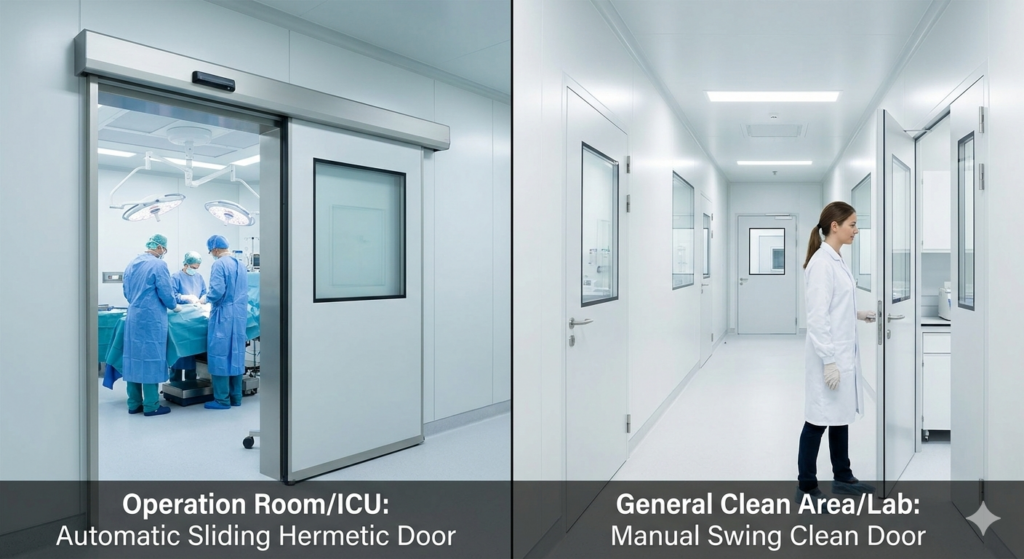
1. What Is a Hospital Cleanroom Door?
A hospital cleanroom door is a high-sealing door system specifically engineered for controlled environments.
It is commonly used in:
-
Operating rooms
-
ICU wards
-
Sterile areas
-
Laboratories
-
GMP cleanroom facilities
Its core objectives are:
-
Maintain air cleanliness classification
-
Prevent cross-contamination
-
Improve sealing and isolation performance
-
Facilitate cleaning and disinfection
2. Core Structure of a Hospital Cleanroom Door System
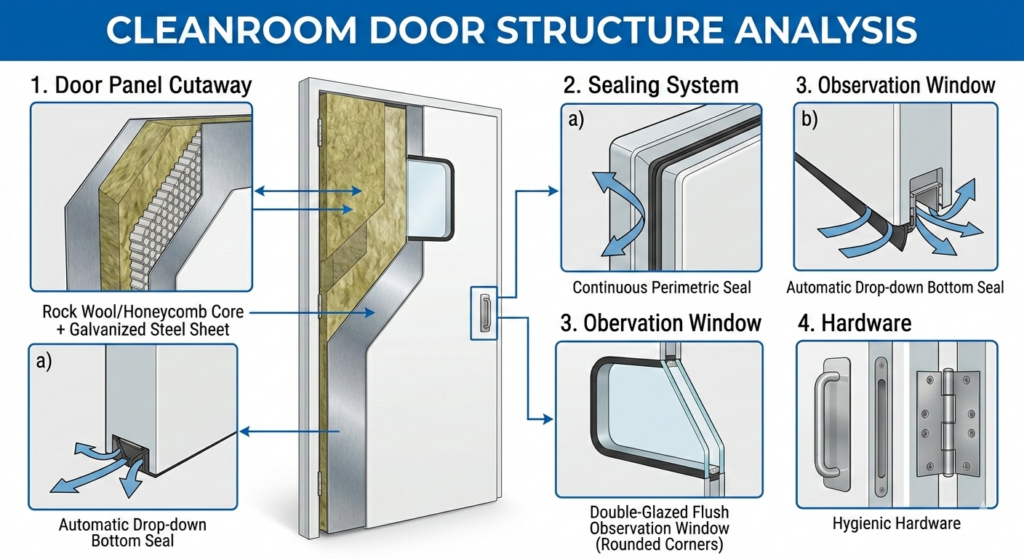
A high-quality cleanroom door typically includes the following structural modules:
1) Door Leaf Structure
-
Galvanized steel sheets
-
Rock wool or honeycomb core filling
-
Antibacterial electrostatic powder coating
This structure ensures strength, durability, and hygienic performance.
2) Airtight Sealing System
-
Embedded perimeter sealing strips
-
Optional automatic drop-down bottom seal
-
Integrated frame-to-wall airtight connection
This system minimizes air leakage and helps maintain room pressure differentials.
3) Vision Panel System
-
Double-layer tempered glass
-
Internal sealed structure
-
Rounded corner design to prevent dust accumulation
The smooth transition design enhances cleanability and infection control.
4) Opening Methods
-
Hinged cleanroom doors
-
Sliding airtight doors
-
Automatic sensor-operated doors
The choice depends on application area and traffic flow requirements.
3. Key Differences Between Cleanroom Doors and Standard Steel Doors
| Item | Hospital Cleanroom Door | Standard Steel Door |
|---|---|---|
| Sealing Performance | High airtight design | No sealing system |
| Antibacterial Coating | Specialized coating | No treatment |
| Air Pressure Control | Designed for pressure stability | Not applicable |
| Application Area | Clean zones | General areas |
A standard steel door cannot meet the air control requirements of a cleanroom environment.
4. Technical Specifications to Consider
When selecting a cleanroom door for engineering projects, key parameters include:
-
Door leaf thickness ≥ 40mm
-
Door frame thickness ≥ 1.2mm
-
Aging resistance of sealing strips
-
Fire rating: 30 min / 60 min (if required)
-
Optional radiation shielding structure
In operating theatre projects, airtight performance is particularly critical.
5. Recommended Door Types by Application Area
Operating Rooms
Recommended: Automatic sliding airtight door
Advantage: Superior sealing performance and smooth operation
ICU Wards
Recommended: Reinforced hinged cleanroom door
Advantage: Structural stability and lower maintenance cost
Laboratories
Recommended: Corrosion-resistant coating + sealing structure
Radiology Departments
Recommended: Airtight structure with integrated lead shielding
6. Core Advantages of Hospital Cleanroom Doors
1) Improved Cleanliness Stability
Airtight systems reduce air leakage and maintain stable pressure differentials.
2) Reduced Infection Risk
Minimizes uncontrolled air exchange between zones.
3) Easy-to-Clean Design
Rounded corners and flush surfaces reduce dust traps.
4) Long-Term Durability
Galvanized steel provides strong corrosion resistance and structural integrity.
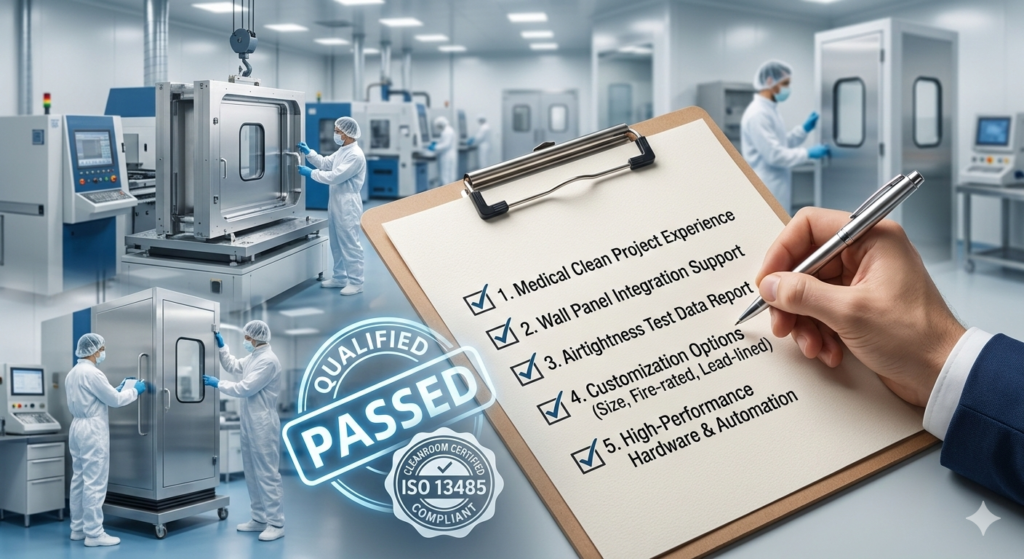
7. What to Evaluate When Procuring for Projects
-
Proven experience in medical cleanroom projects
-
Ability to integrate with steel wall panel systems
-
Availability of airtightness test data
-
Custom sizing and color options
-
Automated production capability
A mature manufacturer typically provides a complete cleanroom door system solution, rather than just a single door product.
8. Factors Affecting Pricing
Hospital cleanroom door pricing depends on:
-
Manual or automatic opening system
-
Sealing performance level
-
Fire or radiation protection requirements
-
Hardware configuration
-
Project volume
For high-cleanliness environments, performance stability should take priority over initial cost.
Conclusion
Hospital cleanroom door systems are critical components in medical engineering projects.
Professional structural design and advanced sealing technology directly influence air control efficiency and infection management outcomes.
Selecting an experienced manufacturer with integrated cleanroom system capabilities is essential to ensuring project quality and long-term reliability.


