
1. What Is a Medical Steel Door?
A medical steel door is a metal door system specifically engineered for healthcare environments such as hospitals, operating rooms, wards, ICUs, and laboratories.
It is typically manufactured with:
-
Galvanized steel sheet substrate
-
Internal honeycomb paper or rock wool core
-
Electrostatic powder coating or antibacterial finish
-
Optional vision panels, kick plates, and fire-rated structures
Its primary objectives are:
-
Safety
-
Easy cleaning
-
Antibacterial performance
-
High structural strength
-
Long-term operational stability
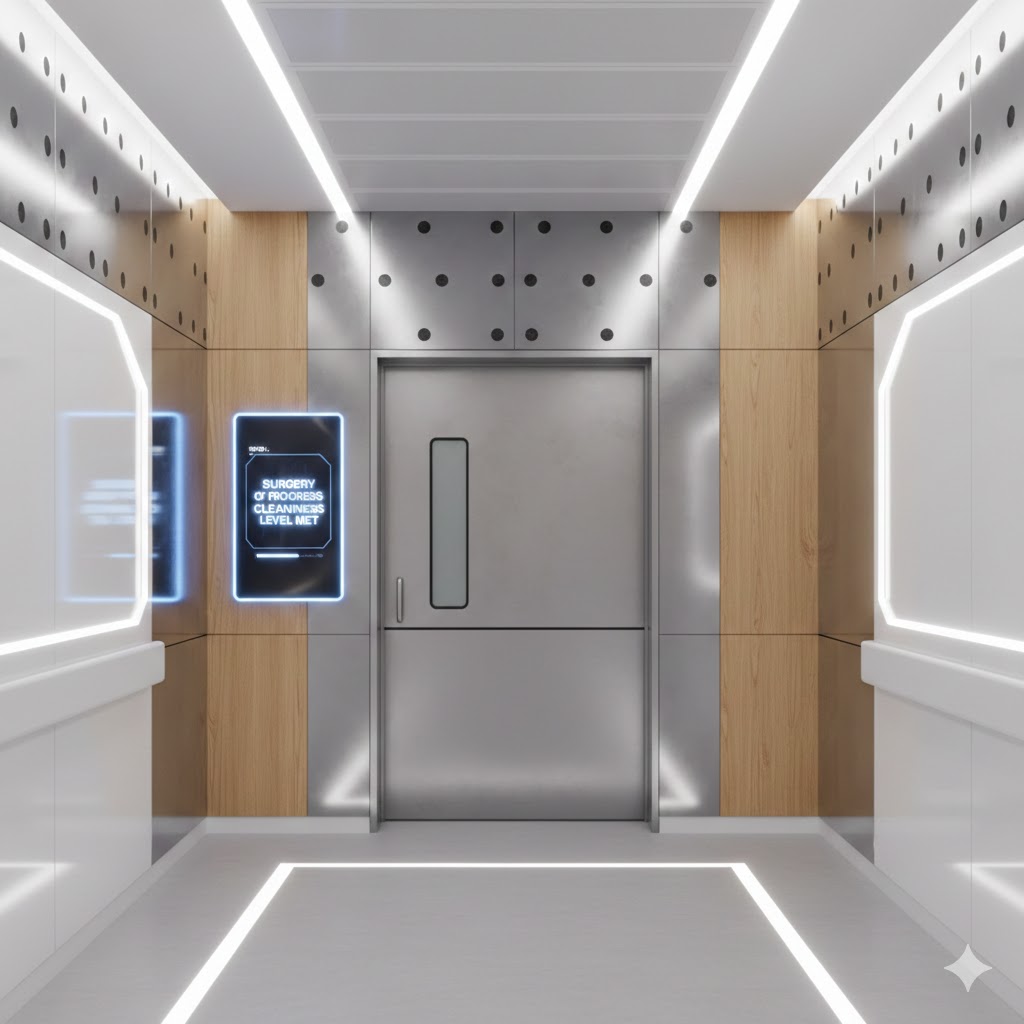
2. Differences Between Medical Steel Doors and Standard Steel Doors
| Item | Medical Steel Door | Standard Steel Door |
|---|---|---|
| Surface Treatment | Antibacterial powder coating | Standard paint finish |
| Structural Strength | Reinforced frame design | Basic structure |
| Airtight Capability | Optional airtight system | No sealing design |
| Impact Protection | Optional kick plates | Not included |
| Application Area | Healthcare facilities | Commercial / Residential |
Healthcare environments require significantly higher standards than general buildings, making professional manufacturing essential.
3. Key Technical Specifications
1) Steel Thickness
-
Door leaf: 0.8mm–1.2mm galvanized steel
-
Door frame: 1.2mm–1.5mm
Greater thickness improves structural rigidity and durability.
2) Core Filling
-
Honeycomb paper (cost-effective option)
-
Rock wool (enhanced fire resistance)
3) Surface Finishing
-
Electrostatic powder coating (corrosion resistance)
-
Antibacterial coating (medical-grade application)
4) Optional Functional Features
-
Fire rating (30 min / 60 min)
-
Radiation shielding (lead-lined structure)
-
Airtight sealing system
-
Automatic door operation system

4. Recommended Configurations by Hospital Area
General Wards
Recommended: Standard medical steel door with vision panel
ICU Areas
Recommended: Reinforced structure + antibacterial coating + kick plate
Operating Rooms
Recommended: Airtight door structure with perimeter sealing design
Radiology Departments
Recommended: Radiation-shielded steel door with integrated lead lining
5. How to Select a Reliable Manufacturer
When choosing a supplier, evaluate:
-
Experience in healthcare engineering projects
-
Custom size capability
-
Automated production lines
-
Installation technical support
-
Availability of testing reports
Manufacturers with mature production systems ensure consistent quality for bulk engineering orders.

6. Price Influencing Factors
The cost of medical steel doors typically depends on:
-
Steel thickness
-
Fire-rating requirements
-
Radiation shielding requirements
-
Hardware brand
-
Custom dimensions
For engineering procurement, long-term performance stability should be prioritized over minimum upfront cost.
7. Why Work with a Professional Medical Door System Supplier?
A specialized manufacturer can provide:
-
Integrated hospital space solutions
-
Large-scale project supply capability
-
OEM customization support
-
Stable long-term after-sales service
In hospital construction projects, supplier capability directly impacts engineering quality and delivery timelines.
Conclusion
A medical steel door is not merely a door — it is a critical component of a hospital’s safety infrastructure.
Proper selection enhances institutional image while ensuring durability and long-term operational reliability.
For healthcare construction projects, partnering with an experienced medical door manufacturer is essential to achieving performance, compliance, and project stability.


