
A Professional Guide for Radiology Construction Projects
In hospital radiology departments such as X-ray rooms, CT scan rooms, DR rooms, and dental imaging clinics, ionizing radiation control is not optional — it is a regulatory requirement.
A radiation shielding lead door is one of the most critical safety barriers in medical radiation protection systems.
If improperly selected or installed, it can lead to radiation leakage, failed inspections, and serious long-term safety risks.
This is not a decorative steel door.
It is a certified radiation protection device.
This article provides a systematic overview from four technical perspectives:
• Radiation protection principle
• Key technical parameters
• Lead equivalent selection
• Installation requirements
1. Working Principle of a Radiation Shielding Lead Door
X-rays are high-energy electromagnetic waves capable of penetrating most building materials.
Lead has a high atomic number (82), giving it strong attenuation capability against X-ray radiation.
The protection process is simple in principle:
Radiation → passes toward the door → absorbed and attenuated by embedded lead layer
By integrating a lead sheet inside the door leaf and frame, radiation intensity is reduced to meet shielding standards defined by radiation protection design reports.
Key Technical Parameter: Lead Equivalent (mmPb)
Lead equivalent is measured in millimeters of lead (mmPb).
Example:
2mmPb means the door provides shielding equivalent to 2mm thickness of pure lead.
This value determines radiation attenuation performance.
2. Basic Structure of a Medical Lead Lined Door
A high-quality hospital lead door typically includes:
Door Leaf Construction
• Galvanized steel sheet surface
• Internal lead sheet (1mmPb–4mmPb common range)
• Mineral wool or honeycomb core infill
Door Frame Structure
• Lead sheet integrated into the frame
• Reinforced welded frame design
Lead Glass Viewing Window
• Lead-lined observation window
• Lead equivalent matches door specification
Opening Types
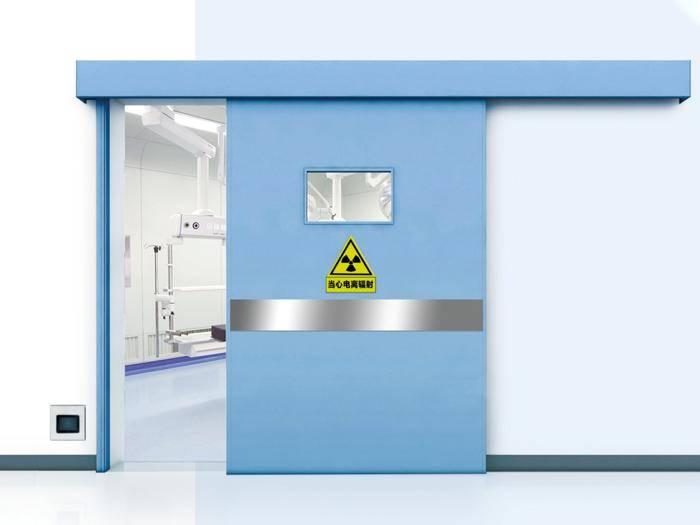
• Single swing lead door
• Sliding airtight lead door
• Automatic electric lead door
Selection depends on room layout, space constraints, and air pressure control requirements.
 3. How to Select the Correct Lead Equivalent?
Lead thickness depends on:
• Equipment power (kV level)
• Workload (daily exposure frequency)
• Radiation protection design calculation
Typical Reference Guide
Dental X-ray room → 1mmPb
DR room → 2mmPb
CT scan room → 2–3mmPb
Nuclear medicine department → Calculated individually
Important:
Under-specification leads to radiation leakage risk.
Over-specification increases cost and door weight unnecessarily.
Scientific calculation based on shielding report is always required.
4. Installation Requirements for Radiation Lead Doors
Installation quality is often the weakest link in radiation projects.
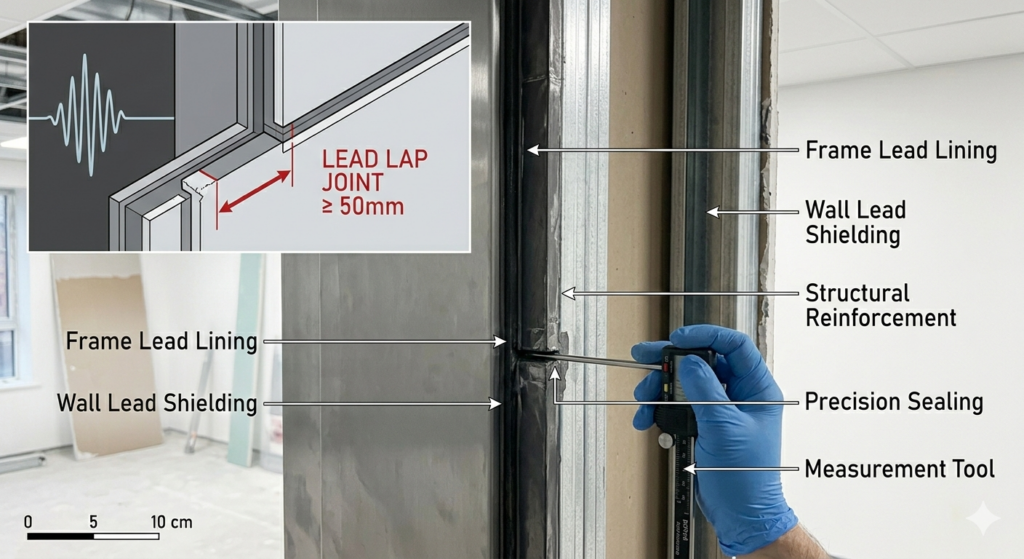
1. Continuous Shielding Between Wall and Door Frame
Lead sheets inside walls must overlap and connect with the door frame shielding.
If not continuous, radiation gaps may occur.
2. Lead Overlap Requirement
Lead layer overlap between wall and frame should be ≥ 50mm to prevent edge leakage.
3. Floor and Ceiling Connection
Bottom sealing structure must connect to floor radiation protection layer.
4. Structural Load Consideration
Lead significantly increases door weight.
A single swing 2mmPb lead door may weigh tens of kilograms more than a standard steel door.
Heavy-duty hinges or reinforced sliding track systems are mandatory to prevent long-term sagging.
Structural reinforcement is not optional — it is essential.

5. Radiation Lead Door vs. Standard Steel Door
| Comparison Item | Radiation Lead Door | Standard Steel Door |
|---|---|---|
| Internal Structure | Lead-lined core | No shielding layer |
| Viewing Window | Lead glass | Regular glass |
| Weight | Heavy | Light |
| Application | X-ray / CT / Radiation rooms | General rooms |
A lead door is fundamentally a protective medical device, not a decorative architectural product.
6. Main Factors Affecting Price
Lead door pricing depends on:
• Lead equivalent thickness (mmPb)
• Door size
• Manual or automatic operation
• Hardware load-bearing grade
• Airtight performance requirement
• Lead material market price fluctuation
Project quotations must be based on radiation shielding drawings and specifications.
7. How to Choose a Professional Lead Door Manufacturer?
When sourcing a radiation shielding door supplier, consider:
• Experience in hospital or radiology projects
• Ability to provide lead sheet test reports
• Custom lead equivalent capability
• Installation technical support
• Integrated supply of lead glass and shielding wall panels
• OEM manufacturing capacity
A mature manufacturer typically provides complete radiation protection system solutions rather than single products.
Conclusion
A radiation shielding lead door is part of a medical safety system.
Proper selection + Professional installation = Compliance + Long-term safety
In radiology construction projects, small details determine whether a project passes inspection and whether protection remains effective for years.


