

Meta Description
Compare galvanized steel and stainless steel doors for hospitals, cleanrooms, and commercial projects. Learn differences in durability, hygiene, corrosion resistance, and cost.
Galvanized Steel vs Stainless Steel Doors: Which Is Better?
Introduction
When selecting steel doors for hospitals, laboratories, cleanrooms, or commercial buildings, one of the most important decisions is choosing the right material.
The two most common options are:
- Galvanized steel
- Stainless steel
Although they may appear similar, their performance, durability, hygiene level, and cost are very different.
This guide explains the key differences and helps you choose the best material for your project.
What Is a Galvanized Steel Door?
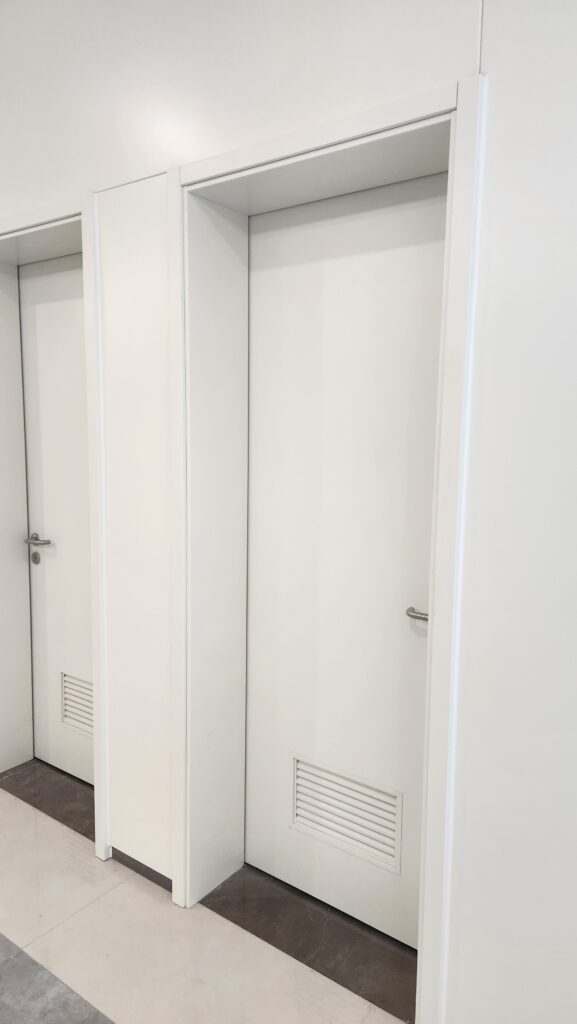
A galvanized steel door is made from steel coated with a protective zinc layer.
The zinc coating helps:
- Prevent rust
- Improve corrosion resistance
- Extend service life
These doors are widely used in:
- Hospitals
- Schools
- Commercial buildings
- Industrial projects
👉 Galvanized steel doors are the most common and cost-effective solution.
What Is a Stainless Steel Door?
A stainless steel door is made from stainless steel alloys containing chromium.
This material provides:
- Excellent corrosion resistance
- Superior hygiene performance
- Long-term durability
Stainless steel doors are commonly used in:
- Operating rooms
- Pharmaceutical factories
- Food processing facilities
- High-humidity environments
Key Differences Between Galvanized and Stainless Steel Doors
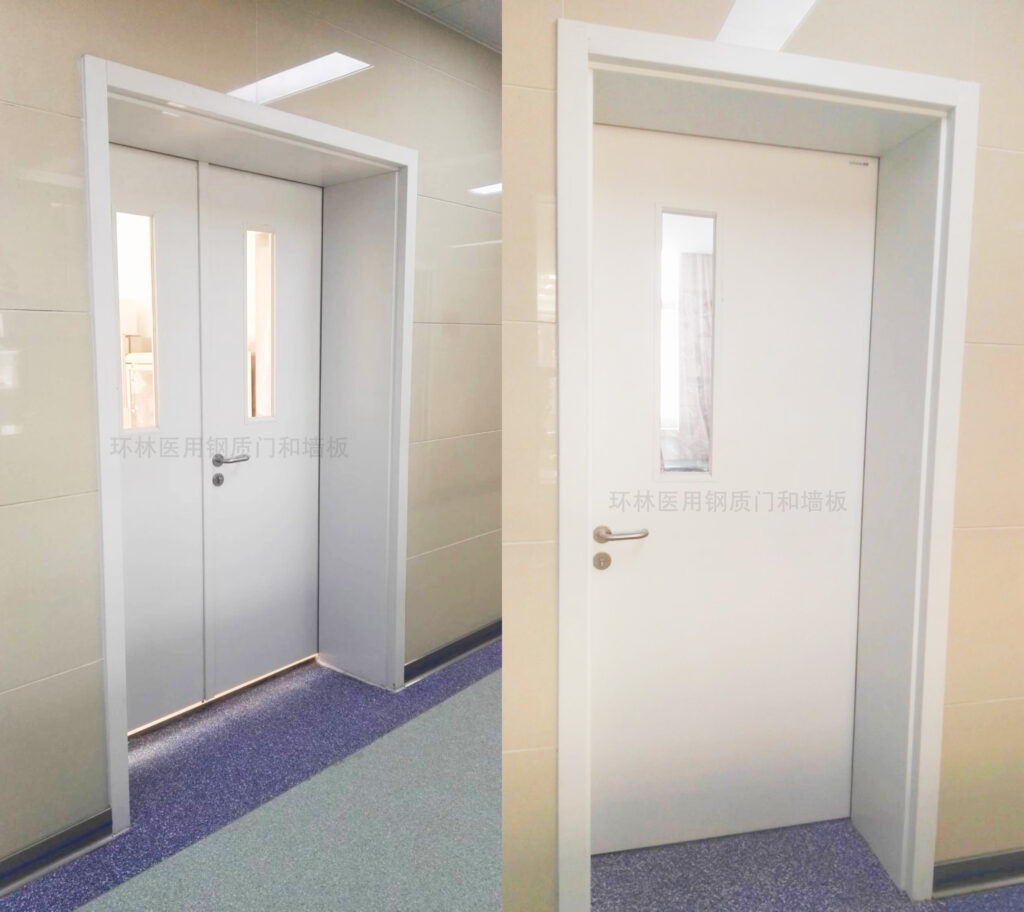
| Feature | Galvanized Steel | Stainless Steel |
|---|---|---|
| Corrosion resistance | Good | Excellent |
| Surface finish | Powder-coated | Metallic finish |
| Hygiene performance | Standard | Superior |
| Cost | Lower | Higher |
| Durability | Good | Very high |
| Maintenance | Moderate | Low |
| Typical use | General projects | High hygiene areas |
👉 The best choice depends on project requirements and budget.
Corrosion Resistance Comparison
Galvanized Steel
- Zinc coating protects against rust
- Suitable for indoor environments
- Can corrode if coating is damaged
Stainless Steel
- Naturally corrosion-resistant
- Excellent for humid environments
- Performs better over long periods
👉 Stainless steel is recommended for areas with high moisture or strict hygiene standards.
Hygiene and Cleanability
In medical and cleanroom projects, hygiene is critical.
Galvanized Steel
- Smooth coated surface
- Easy to clean
- Good for standard hospital areas
Stainless Steel
- Non-porous surface
- More resistant to bacteria and chemicals
- Preferred in sterile environments
👉 Stainless steel is the premium solution for hygiene-sensitive applications.
Strength and Durability
Both materials provide good structural strength, but:
Galvanized Steel
- Strong and stable
- Suitable for high-frequency use
Stainless Steel
- Higher long-term durability
- Better resistance to wear and impact
👉 Stainless steel generally has a longer service life.
Appearance and Surface Finish
Galvanized Steel
- Usually powder-coated
- Available in multiple colors
Stainless Steel
- Metallic appearance
- Modern industrial aesthetic
👉 Stainless steel is often selected for premium projects.
Cost Comparison
Galvanized Steel Doors
✅ Lower initial cost
✅ Cost-effective for large projects
Stainless Steel Doors
❌ Higher material cost
✅ Lower long-term maintenance
👉 Budget and environment should both be considered.
Best Applications for Each Material
Galvanized Steel Doors
Recommended for:
- General hospital areas
- Offices
- Schools
- Commercial buildings
Stainless Steel Doors
Recommended for:
- Operating rooms
- Pharmaceutical cleanrooms
- Food factories
- High-humidity environments
How to Choose the Right Steel Door Material
Choose Galvanized Steel If:
- Budget is important
- Standard indoor use
- General medical areas
Choose Stainless Steel If:
- Hygiene requirements are strict
- Environment is humid
- Long-term durability is critical
Common Mistakes to Avoid
❌ Choosing only based on price
❌ Using galvanized steel in highly corrosive environments
❌ Ignoring hygiene requirements
❌ Selecting stainless steel unnecessarily for low-demand areas
👉 Material selection should match the project environment.
Professional Project Recommendation
For hospital projects:
👉 A mixed solution is often best.
Example:
- Operating rooms → stainless steel
- General wards → galvanized steel
👉 This balances performance and cost.

FAQ
Q1: Is stainless steel better than galvanized steel?
It depends on the application. Stainless steel offers better corrosion resistance and hygiene but costs more.
Q2: Do galvanized steel doors rust?
They resist rust well, but damaged coatings may corrode over time.
Q3: Which material is better for hospitals?
Both are used, depending on the specific area and hygiene requirements.
Q4: Are stainless steel doors more expensive?
Yes, due to higher material and manufacturing costs.
Q5: Which material lasts longer?
Stainless steel generally has a longer lifespan in demanding environments.
Conclusion
Both galvanized steel and stainless steel doors have important advantages.
Choosing the right material depends on:
- Project environment
- Hygiene requirements
- Budget
- Long-term maintenance expectations
By selecting the correct material, you can improve durability, safety, and overall project performance.


