
Meta Description
Discover the best doors for hospital operating rooms. Learn about airtight sealing, hygiene standards, materials, and how to choose the right OR door system.
Best Doors for Hospital Operating Rooms
Introduction
Operating rooms are among the most critical environments in any hospital.
Every component inside the room must support:
- Sterility
- Infection control
- Safety
- Efficient workflow
One often overlooked but essential component is the operating room door.
Choosing the wrong door can lead to:
- Air leakage
- Contamination risks
- Poor hygiene performance
- Compliance issues
This guide explains the best door options for hospital operating rooms and how to select the right solution for your project.
Why Operating Room Doors Are Different
Operating rooms require much higher standards than normal hospital areas.
An OR door must provide:
✅ Airtight sealing
✅ Smooth hygienic surfaces
✅ Easy cleaning
✅ Reliable operation
✅ Durability for high-frequency use
👉 Standard commercial doors cannot meet these requirements.
Best Types of Doors for Operating Rooms
1. Airtight Sliding Doors (Most Recommended)
These are the most common OR doors in modern hospitals.
Advantages:
- Excellent airtight performance
- Space-saving design
- Smooth automatic operation
- Easy equipment movement
👉 Ideal for high-traffic surgical areas.
2. Airtight Swing Doors
Used where sliding systems are not practical.
Advantages:
- Lower cost
- Simple structure
- Good sealing performance
👉 Suitable for smaller operating rooms.
3. Automatic Hermetic Doors
Premium solution for advanced hospitals.
Features:
- Touchless operation
- High sealing precision
- Integrated safety sensors
👉 Improves hygiene and workflow efficiency.
Key Features of a Good Operating Room Door
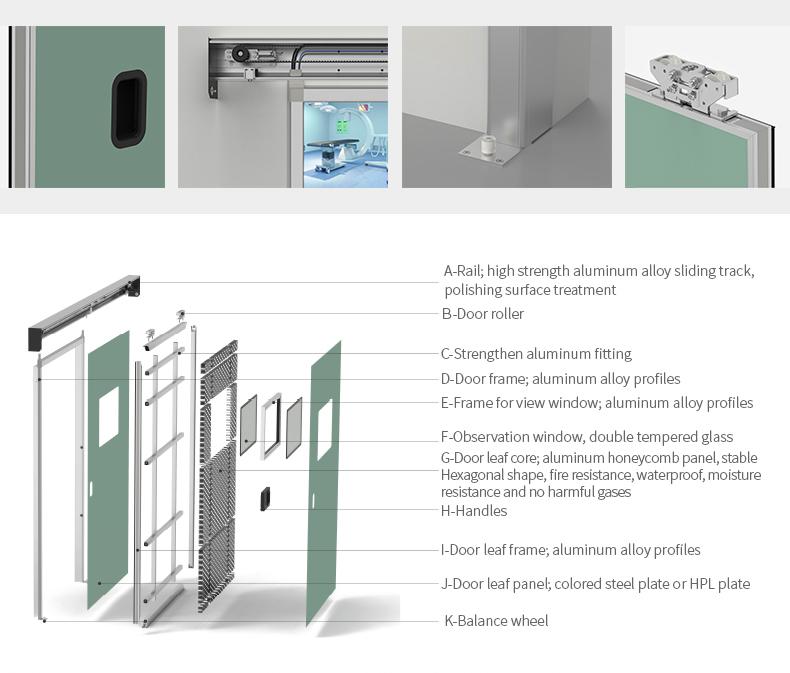
1. Airtight Sealing System
The most important feature.
OR doors use:
- Rubber gaskets
- Compression sealing systems
- Precision frame alignment
👉 Prevents contaminated air exchange.
2. Hygienic Surface Design
Operating room doors should have:
- Smooth surfaces
- Minimal joints
- Antibacterial coatings
👉 Easier cleaning reduces infection risks.
3. Durable Structure
OR doors are used constantly throughout the day.
Recommended:
- Reinforced steel structure
- Heavy-duty hardware
- Impact-resistant panels
4. Observation Windows
Most OR doors include vision panels for safety.
Features:
- Double-glazed glass
- Flush-mounted design
- Easy cleaning surface
5. Quiet and Smooth Operation
Automatic doors should operate:
- Quietly
- Smoothly
- Reliably
👉 Reduces disruption during surgical procedures.
Best Materials for Operating Room Doors
Galvanized Steel
- Durable
- Cost-effective
- Commonly used
Stainless Steel
- Higher hygiene performance
- Better corrosion resistance
- Preferred for premium projects
👉 Stainless steel is ideal for high-cleanliness environments.
Operating Room Door Size Standards
Typical OR door sizes:
| Door Type | Standard Width |
|---|---|
| Single swing door | 1000–1200 mm |
| Double swing door | 1400–1800 mm |
| Sliding airtight door | 1400–2000 mm |
👉 Larger openings improve equipment movement.
Operating Room Door vs Normal Hospital Door
| Feature | OR Door | Standard Hospital Door |
|---|---|---|
| Airtight sealing | Yes | Usually no |
| Hygiene level | High | Standard |
| Automation | Common | Optional |
| Surface design | Seamless | Basic |
| Application | Surgery rooms | General areas |
👉 OR doors are specialized medical systems.
Common Mistakes in OR Door Selection
❌ Choosing standard commercial doors
❌ Ignoring airtight performance
❌ Poor installation alignment
❌ Low-quality sealing systems
❌ Inadequate door width for equipment
👉 These mistakes can compromise operating room performance.
How to Choose the Right OR Door Supplier
A professional supplier should provide:
✅ Technical drawings
✅ Airtight performance support
✅ Custom size manufacturing
✅ Installation guidance
✅ Medical project experience
👉 Supplier experience is critical in hospital projects.
Recommended Solution for Modern Hospitals
For best performance:
👉 Use automatic airtight sliding doors with:
- Antibacterial coating
- Stainless steel finish
- Flush observation windows
- Automatic sensor operation
👉 This is the standard solution in many modern hospitals.
FAQ
Q1: What type of door is best for operating rooms?
Automatic airtight sliding doors are the most widely recommended solution.
Q2: Why do OR doors need airtight sealing?
To maintain sterile conditions and prevent contamination.
Q3: Are automatic OR doors necessary?
Not always, but they improve hygiene and workflow efficiency.
Q4: What material is best for OR doors?
Galvanized steel is common, while stainless steel offers higher hygiene performance.
Q5: Can OR doors be customized?
Yes, including size, automation, finish, and window configuration.
Conclusion
Choosing the best operating room door is essential for:
- Infection control
- Surgical safety
- Workflow efficiency
- Long-term durability
Modern hospitals should prioritize:
- Airtight sealing
- Hygienic materials
- Reliable automatic operation
Working with an experienced OR door supplier ensures your project meets strict medical standards.
Air Tight Door vs Normal Door: What’s the Difference?
How to Choose the Right Hospital Door for Your Project (Complete Guide)
Steel Door Material Guide: Galvanized Steel vs Stainless Steel


