
Meta Description
Learn ICU door requirements for hospitals, including hygiene standards, safety features, airtight sealing, materials, and recommended door designs.
ICU Door Requirements: Safety, Hygiene and Design
Introduction
Intensive Care Units (ICUs) are among the most sensitive and high-risk areas in any hospital.
Every design element must support:
- Patient safety
- Infection control
- Fast medical response
- Efficient workflow
One critical but often underestimated component is the ICU door system.
ICU doors are not standard hospital doors — they require specialized features to meet medical and operational standards.
This guide explains the key ICU door requirements and how to choose the right solution for modern healthcare projects.
Why ICU Doors Are Important
ICU environments operate under strict medical requirements.
The wrong door design can lead to:
- Poor infection control
- Reduced patient visibility
- Difficult emergency access
- Increased maintenance issues
👉 ICU doors directly affect patient care efficiency and hospital safety.
Key ICU Door Requirements
1. Hygiene and Infection Control
ICU doors must support strict cleaning protocols.
Recommended features:
- Smooth seamless surfaces
- Antibacterial coating
- Easy-to-clean materials
- Minimal dust accumulation points
👉 Hygiene is one of the highest priorities in ICU areas.
2. Safety and Emergency Access
Medical staff must move quickly during emergencies.
ICU doors should provide:
- Wide clear openings
- Reliable operation
- Durable hardware
- Easy emergency access
👉 Door failure in ICU areas can create serious risks.
3. Visibility and Observation
Patient monitoring is essential.
Most ICU doors include:
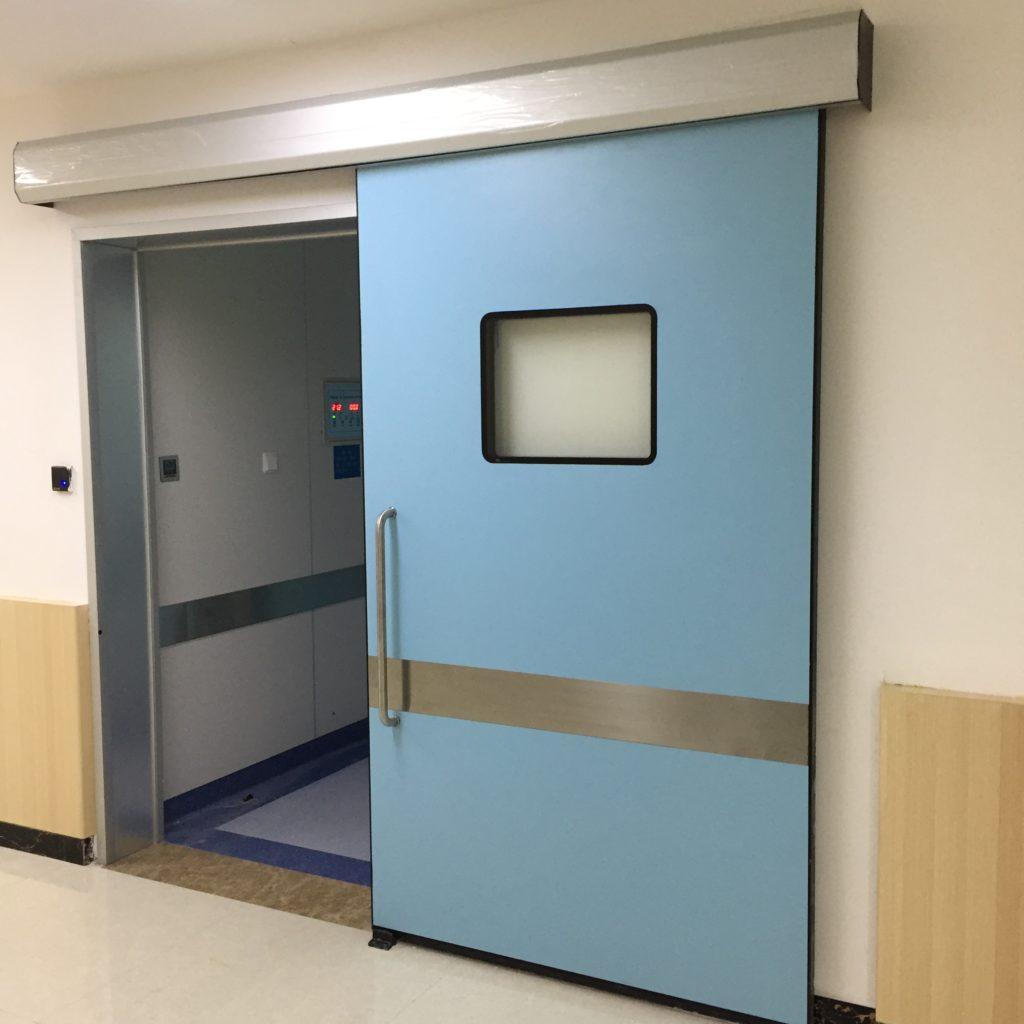
- Large vision panels
- Double-glazed safety glass
- Clear observation visibility
👉 Medical staff need visual access without entering the room unnecessarily.
4. Noise Reduction
ICU patients require a quiet environment for recovery.
Recommended features:
- Sound insulation core
- Tight sealing system
- Soft-close mechanisms
👉 Noise control improves patient comfort and recovery quality.
5. Durability for High-Frequency Use
ICU doors operate constantly throughout the day.
The door structure should include:
- Reinforced steel construction
- Heavy-duty hinges
- Impact-resistant surfaces
👉 Long-term durability reduces maintenance costs.
Best Materials for ICU Doors
Galvanized Steel
- Durable
- Cost-effective
- Common in hospitals
Stainless Steel
- Better hygiene performance
- Excellent corrosion resistance
- Premium medical solution
👉 Stainless steel is preferred in high-cleanliness areas.
ICU Door Size Requirements
Typical ICU door dimensions:
| Door Type | Recommended Width |
|---|---|
| Single ICU door | 1000–1200 mm |
| Double ICU door | 1400–1800 mm |
👉 Wider doors improve bed and equipment movement.
ICU Door Types
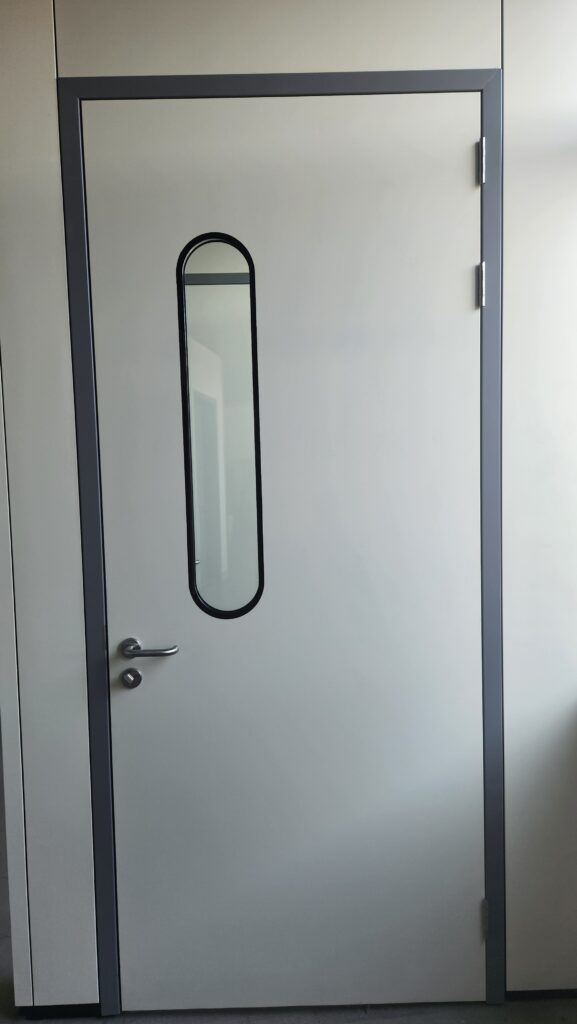
Swing Doors
- Simple structure
- Cost-effective
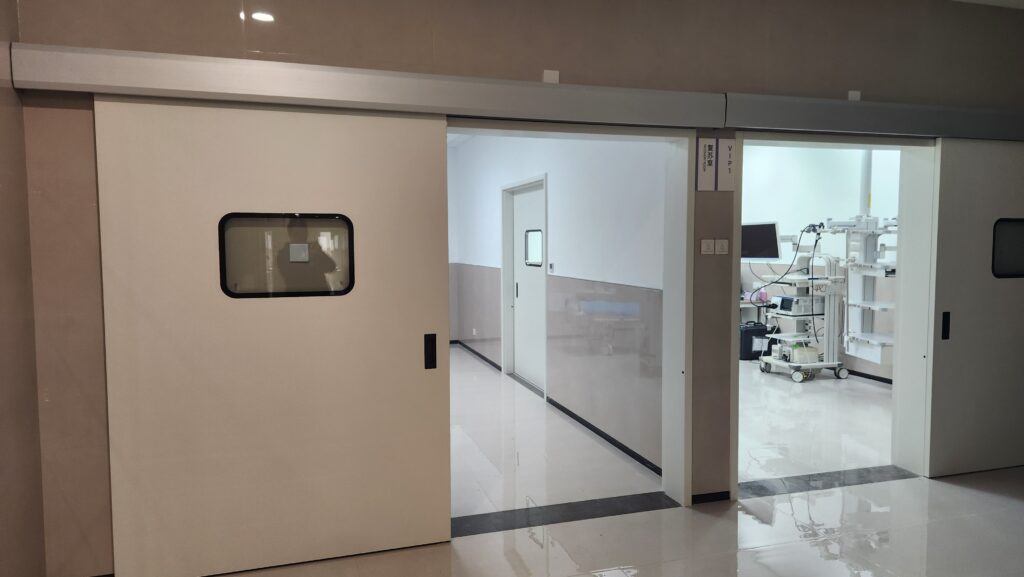
Sliding Doors
- Space-saving
- Smooth patient transport
Automatic Doors
- Hands-free operation
- Better infection control
👉 Automatic sliding doors are increasingly used in modern ICUs.
ICU Door vs Standard Hospital Door
| Feature | ICU Door | Standard Hospital Door |
|---|---|---|
| Observation window | Large | Small or optional |
| Hygiene level | High | Standard |
| Sound insulation | Important | Basic |
| Access width | Wider | Standard |
| Usage frequency | Very high | Moderate |
👉 ICU doors are designed for critical care environments.
Common ICU Door Design Mistakes
❌ Narrow door openings
❌ Poor visibility design
❌ Difficult cleaning surfaces
❌ Weak hardware systems
❌ No sound insulation consideration
👉 These problems reduce ICU operational efficiency.
Recommended ICU Door Features
Modern ICU projects often use:
✅ Automatic sliding systems
✅ Large flush observation windows
✅ Antibacterial powder coating
✅ Sound insulation core
✅ Soft-close mechanisms
👉 These features improve both safety and patient experience.
How to Choose the Right ICU Door Supplier
A reliable supplier should provide:
- Medical project experience
- Custom size manufacturing
- Technical drawings
- Hygiene-compliant designs
- Installation guidance
👉 Supplier expertise is critical in healthcare projects.
FAQ
Q1: What type of door is best for ICU rooms?
Automatic sliding or wide swing steel doors are commonly recommended.
Q2: Why do ICU doors need observation windows?
To allow continuous patient monitoring while reducing unnecessary room entry.
Q3: Are airtight doors required in ICUs?
Not always, but sealing performance is important for infection control.
Q4: What material is best for ICU doors?
Galvanized steel is common, while stainless steel offers higher hygiene performance.
Q5: What is the standard ICU door width?
Usually between 1000–1800 mm depending on room design and equipment needs.
Conclusion
ICU doors play a vital role in:
- Infection control
- Emergency response
- Patient monitoring
- Workflow efficiency
Modern ICU projects should prioritize:
- Hygienic materials
- Wide access openings
- Durable construction
- Observation visibility
Working with an experienced ICU door supplier ensures long-term safety and operational reliability.


