
Meta Description
Learn standard hospital door sizes, dimensions for ICU, operating rooms, and X-ray rooms. Includes customization options and design tips.
Standard Sizes of Hospital Doors
Introduction
In hospital construction projects, choosing the correct door size is critical for:
- Equipment access
- Patient movement
- Safety compliance
- Workflow efficiency
Unlike residential doors, hospital doors must follow specific size standards based on different medical areas.
This guide explains standard hospital door dimensions and how to choose the right size for your project.
Why Hospital Door Size Matters
Incorrect door sizing can cause serious issues:
- Medical equipment cannot pass through
- Delays during installation
- Non-compliance with building regulations
- Reduced operational efficiency
👉 Proper sizing ensures smooth hospital operations.
Standard Hospital Door Sizes
While sizes vary by project, common standards include:
Single Door
- Width: 900–1100 mm
- Height: 2100–2400 mm
Double Door
- Width: 1200–1800 mm
- Height: 2100–2400 mm
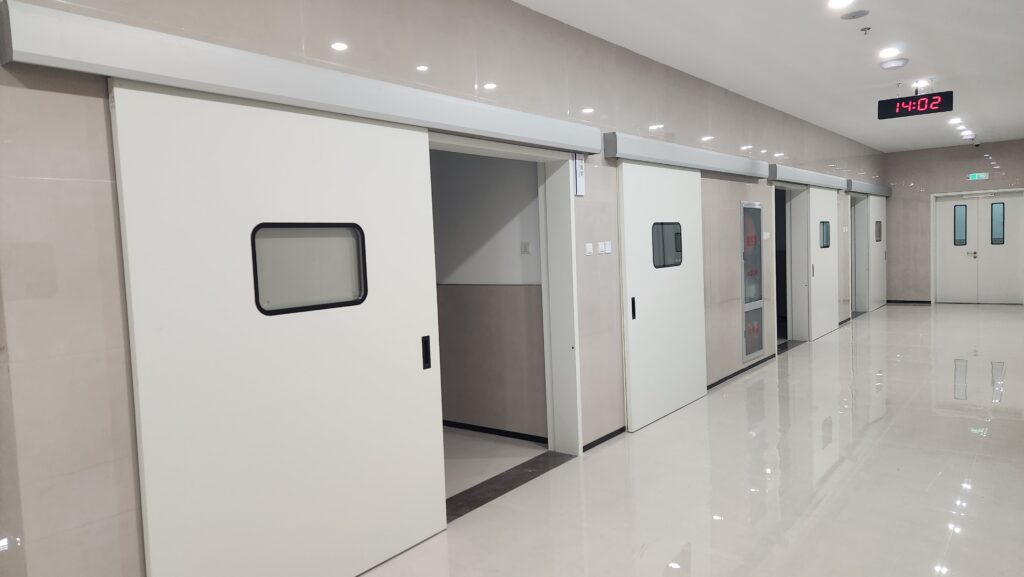
Sliding Door
- Width: 1200–2000 mm
- Height: 2100–2500 mm
👉 Sliding doors are often used where space is limited.
Hospital Door Sizes by Application
1. Patient Room Doors
- Width: 900–1100 mm
- Allows bed and wheelchair access
2. ICU Doors
- Width: 1100–1400 mm
- Often includes vision panels
3. Operating Room (OR) Doors
- Width: 1400–1800 mm
- Usually sliding airtight doors
4. X-Ray / CT Room Doors
- Width: 1000–1500 mm
- Depends on equipment size
- May include lead lining
5. Corridor Doors
- Width: 1000–1500 mm
- Fire-rated requirement
Door Thickness and Structure
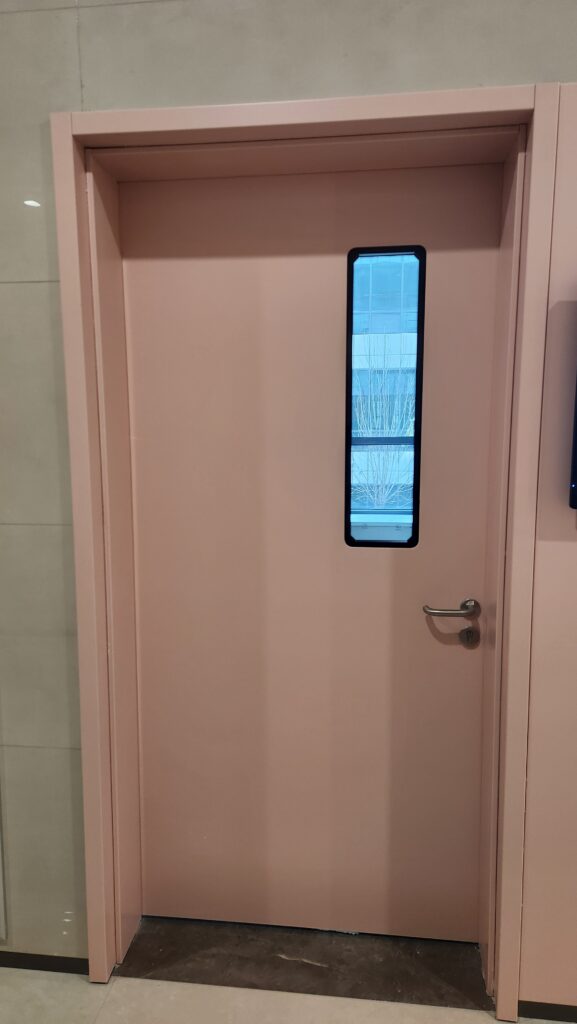
Standard door leaf thickness:
- 40–50 mm (common)
- Heavier for specialized doors
Frame thickness:
- ≥1.2 mm steel recommended
👉 Structural strength is as important as size.
Clear Opening vs Door Size
Important concept:
👉 Clear opening size ≠ door leaf size
- Clear opening = usable passage width
- Door size = total including frame
👉 Always confirm clear opening with your supplier.
Customization Options
Hospital doors are often customized based on project needs:
Custom Width & Height
- For large medical equipment
Vision Panels
- Observation windows
- Double-glazed or lead glass
Door Type
- Swing or sliding
- Manual or automatic
Special Features
- Airtight sealing
- Radiation shielding
- Fire rating
Factors Affecting Door Size Selection
1. Equipment Size
Large machines require wider doors
2. Traffic Flow
High traffic areas need wider access
3. Safety Regulations
Fire escape and accessibility standards
4. Space Availability
Wall structure and installation space
Common Mistakes to Avoid
❌ Choosing standard size without checking equipment
❌ Ignoring clear opening dimensions
❌ Not considering future equipment upgrades
❌ Using narrow doors in high-traffic areas
👉 These mistakes can cause costly redesigns.
Best Practice for Hospital Projects
For accurate sizing:
👉 Work with a professional supplier who can provide:
- Technical drawings
- Size recommendations
- Custom manufacturing
- Installation guidance
👉 This ensures perfect fit and compliance.
FAQ
Q1: What is the standard hospital door width?
Typically 900–1100 mm for single doors and 1200–1800 mm for double doors.
Q2: What size door is used in operating rooms?
Usually 1400–1800 mm wide sliding doors.
Q3: Can hospital doors be customized?
Yes, most projects require custom sizes.
Q4: What is the standard door height?
Commonly 2100–2400 mm.
Q5: What is clear opening size?
The actual usable width when the door is open.
H2:Conclusion
Selecting the correct hospital door size is essential for:
- Efficient workflow
- Equipment accessibility
- Compliance with standards
By understanding standard dimensions and customization options, you can ensure your project runs smoothly and avoids costly mistakes.


